
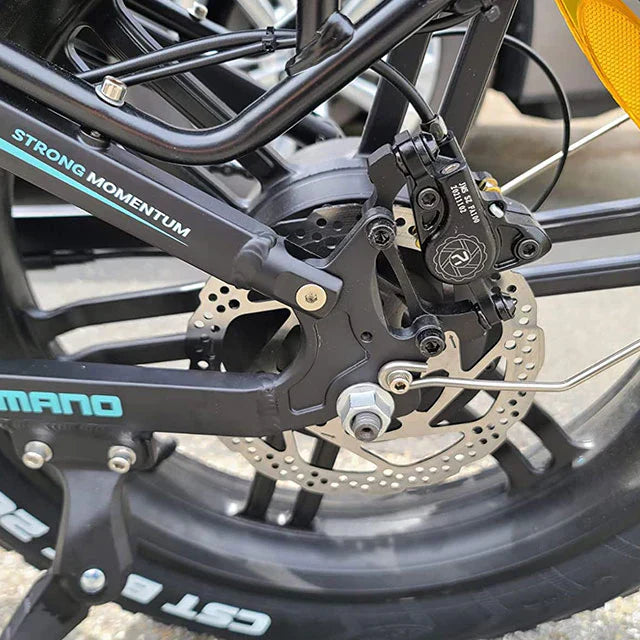
Understanding Hydraulic Disc Brakes on Electric Bikes
Braking systems are the most critical safety feature on any electric bike. While there are several options available, the two primary categories are hydraulic disc brakes and mechanical (non-hydraulic) brakes. For high-speed e-bikes, understanding how these systems differ is essential for your safety and performance.
What are Hydraulic Disc Brakes?
As the name suggests, a hydraulic system uses fluid to transmit force. In this setup, brake fluid is sealed inside the cable housing. When you squeeze the brake lever, it pushes a piston that compresses the fluid, forcing the brake pads to grip the disc rotor. This closed-circuit system creates a highly efficient and powerful stopping mechanism.
For a premium ride featuring this advanced stopping power, the Alaska Pro M-520 is an ideal choice for riders who prioritize safety and control.
How the System Works
The mechanics are simple yet effective. When you pull the brake lever, an internal oil pump generates pressure. This pressure pushes the brake pads against the disc with significant force. Once you release the lever, the internal pressure naturally resets the piston. This design often includes an electronic cutoff that instantly stops the motor when you brake, protecting both the rider and the electrical system.
Why Choose Hydraulic Over Mechanical?
If you are looking for a high-performance mountain e-bike, hydraulic brakes are the gold standard. Here are the primary benefits for riders over 40 who value stability:
- Reduced Effort: You get more stopping power with much less finger pressure, reducing hand fatigue on long rides.
- Superior Safety: They provide faster, more consistent braking, which helps prevent skidding or rollovers.
- Smooth Performance: The fluid-based system offers a "modulated" feel, meaning you have finer control over how quickly you slow down.
- Durability: Because the system is sealed, it is less likely to be affected by dirt, mud, or rust compared to traditional cables.
Hydraulic vs. Non-Hydraulic Brakes
While hydraulic systems represent a higher initial investment, they offer a vastly superior riding experience. Mechanical brakes are traditional and easier for a DIY fix, but they rely on steel cables that can stretch or lose tension over time. In adverse conditions like rain, heavy off-road trails, or long downhills, mechanical brakes may require significantly more effort to stop the bike effectively.
Conclusion: Investing in Your Safety
Hydraulic disc brakes allow you to ride with confidence in any weather or terrain. While the maintenance—such as occasional fluid "bleeding"—is more specialized, the safety and comfort they provide are well worth the trade-off. If your budget allows, choosing an e-bike with hydraulic brakes is a smart investment in your long-term riding enjoyment.
Share:
The Health Benefits of E-Bikes: Why Electric Cycling is Better for You
Canadian E-Bike Laws: Everything You Need to Know for 2026