
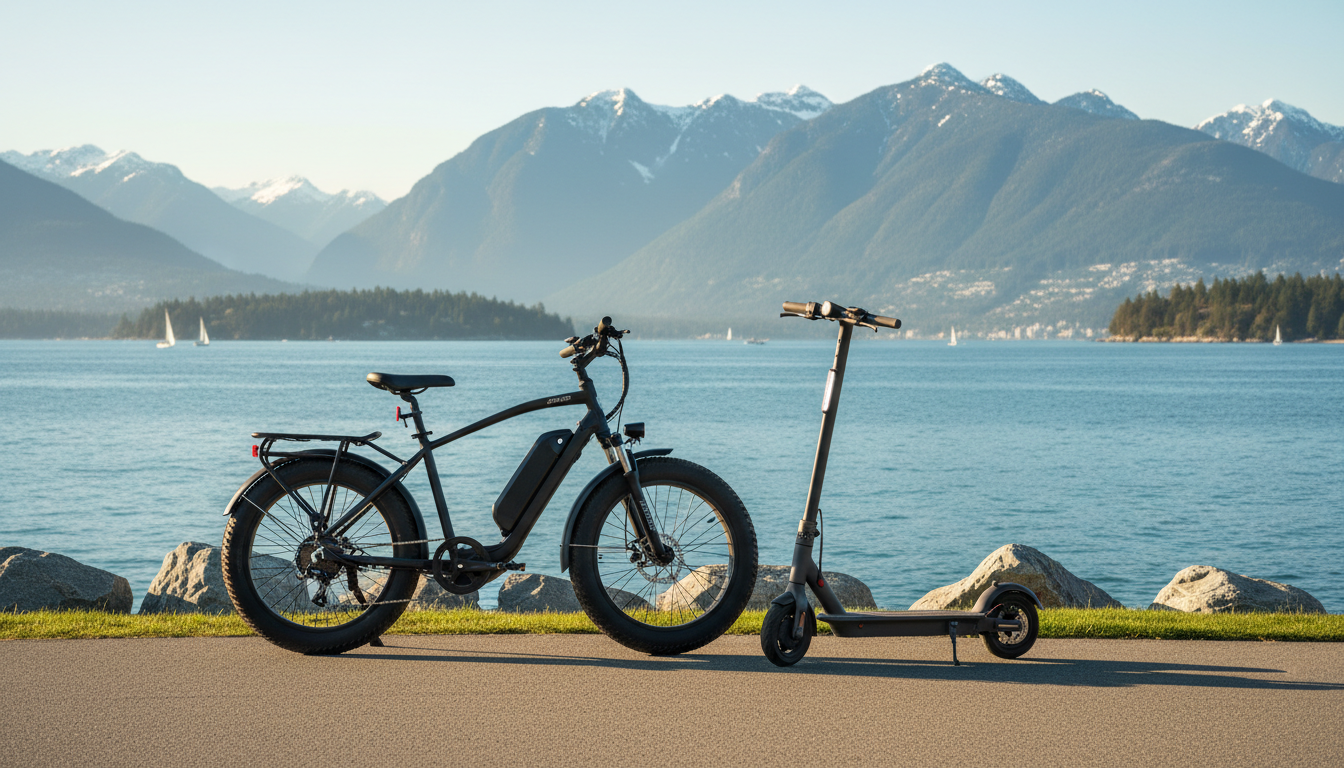
E-Bike or Electric Scooter: Which One Actually Makes Sense for You?
If you are looking for a way to navigate Canadian city streets without the frustration of gridlock or expensive parking fees, you have likely compared electric bikes and electric scooters. Both offer a gas-free way to get from A to B, but in 2026, the gap between these two technologies has widened. Choosing the right one isn't just about the price tag—it’s about your comfort, safety, and how your body feels after a 20-minute commute.
The Comfort Factor (And Your Joint Health)
Standing on a small, vibrating deck for a 30-minute trip isn't exactly a spa day for your joints. Electric scooters require you to remain standing, and because their wheels are typically small (8–10 inches), you feel every crack, pothole, and pebble in the road. For riders over 40, this constant vibration can lead to significant knee and lower back fatigue.
An e-bike is built for ergonomic comfort. You have a dedicated seat, a natural posture, and much larger tires (often 26 inches) that soak up road chatter. On a model like the Nova B-360, you can adjust the handlebars and saddle to fit your frame perfectly, providing a much kinder experience for your back and hips.
Real-World Range: How Far Can You Truly Go?
Range is a major differentiator. Most electric scooters are designed for "last-mile" connectivity—getting you from a transit station to your final destination. They typically offer a real-world range of 15 to 25 miles before needing a charge. Furthermore, if a scooter battery dies, you are left pushing a heavy piece of metal.
E-bikes operate on a different scale. Because you can combine the motor's power with your own pedaling, you aren't solely dependent on the battery. Most e-bikes comfortably offer 40 to 60 miles of range. For those planning serious weekend adventures, the Alaska Pro M-520 features a dual-battery system that can reach up to 160 miles, making it a true car-replacement tool.
Stability and Safety in 2026
Safety regulations in 2026 have become stricter, and for good reason. Scooters can feel "tippy" due to their high center of gravity and narrow handlebars. Small wheels are also prone to getting stuck in streetcar tracks or large cracks, which can lead to sudden falls. E-bikes offer the proven stability of a bicycle geometry, a lower center of gravity, and superior braking systems.
Most high-quality e-bikes now come with hydraulic disc brakes, which provide reliable stopping power in wet Canadian weather—something many entry-level scooters lack. Additionally, an e-bike with fat tires can handle gravel paths and light snow, whereas a scooter is strictly limited to smooth, dry pavement.
The Portability Trade-Off
This is where scooters hold their ground. If you live in a small apartment with no elevator or need to tuck your ride under a desk, a folding scooter is incredibly convenient. E-bikes are heavier and require more storage space, though many riders find that a sturdy bike lock and a dedicated bike rack solve these issues easily.
Which One Fits Your Life?
- Choose a Scooter if: Your trips are under 2 miles, you have very limited storage space, and you only ride on perfectly flat, well-maintained sidewalks.
- Choose an E-Bike if: You value long-term joint comfort, need to carry groceries or gear, want the safety of a stable frame, and plan on riding in various weather conditions.
For the mature rider who wants to stay active while enjoying a safe, predictable commute, the e-bike is the clear winner. It is a versatile vehicle that grows with your needs rather than a limited-distance gadget. Take a look at our most popular models to see why so many Canadians are making the switch to two wheels.
Share:
Are High-End Electric Bikes Worth the Investment? A 2,000 km Durability Report
From BMX Champ to E-Bike Explorer: A Rider's Journey