
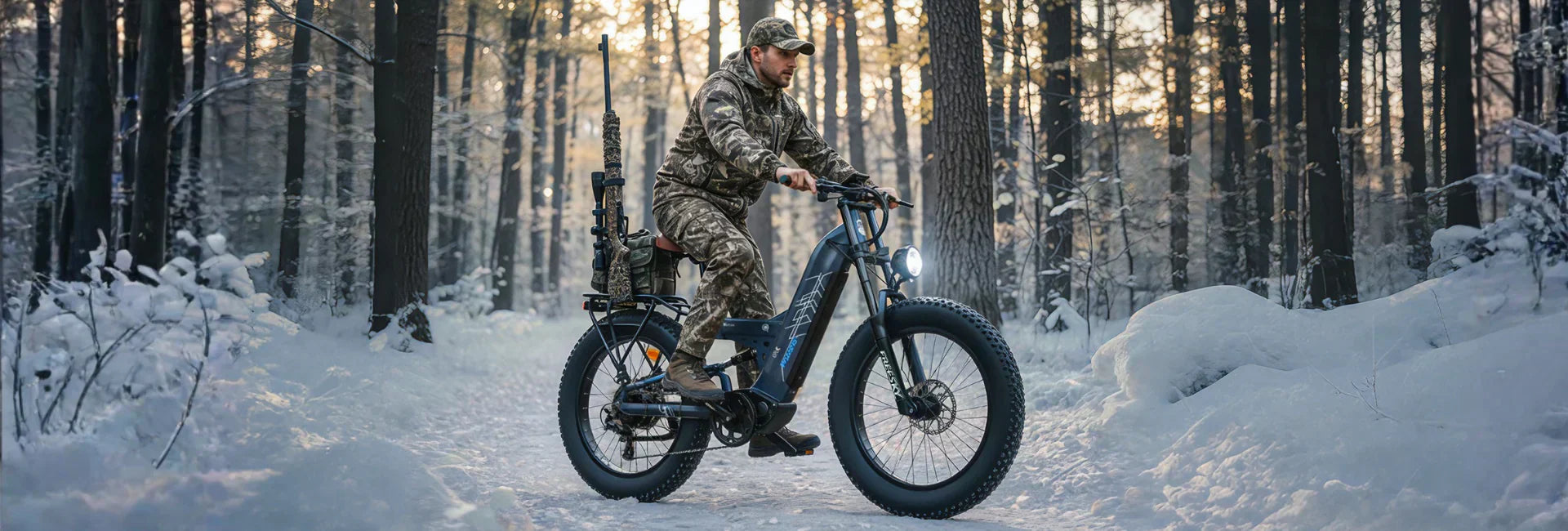
Getting Deep into the Bush: A Canadian Hunter’s Guide to E-Bikes and Regulations
Hunting season in Canada is more than just a date on the calendar—it is a tradition that marks the turning of the year. Whether you are waiting for a moose draw in Ontario, scouting elk in the BC interior, or heading out for whitetail in the Maritimes, being prepared is the difference between a successful harvest and a long, frustrating walk in the cold.
In 2026, navigating the bush requires more than just a good rifle; you need to understand the evolving legal landscape of electric assist. While e-bikes have become an essential tool for the modern hunter, the rules depend entirely on where your boots hit the dirt.
Understanding the Canadian Patchwork of Rules
Because Canadian terrain varies from the thick brush of the Canadian Shield to the steep grades of the Rockies, provincial regulations are increasingly specific about "motorized" access. Most provinces, including Ontario, BC, and Alberta, generally follow the 500W motor / 32 km/h speed cap convention for street-legal use, but the woods are a different story.
- British Columbia: BC now uses a two-class system. As of 2026, "Standard" e-bikes (500W) are common, but "Motor Vehicle Prohibitions" in certain Wildlife Management Units (WMUs) specifically include e-bikes. If an area is closed to motor vehicles to protect habitat, your e-bike is usually grounded too.
- Ontario: E-bikes are permitted on many Crown Land trails. However, Class 3 e-bikes (those exceeding 32 km/h) are often restricted in provincial parks and conservation areas.
- Alberta: Alberta remains one of the most e-bike friendly provinces, with many provincial parks open to Class 1 e-bikes since 2021. However, 1000W+ models are strictly classified as Off-Highway Vehicles (OHVs) and require registration and insurance if used on public land.
For the steep, mountainous terrain seen out west, a dual-motor beast like the Warrior Pro M-530 provides the "all-wheel drive" traction needed when a logging road turns into a muddy mess.
Why E-Bikes are Changing the Game for 40+ Hunters
As we get older, those 5-kilometre treks with a heavy pack feel longer. An e-bike isn't a replacement for woodsmanship; it is a tool for smarter access. Here is why they are now a staple in Canadian hunting camps:
- Silent Approach: Unlike a loud quad, an e-bike is nearly silent. You can slip into your stand at dawn without alerting every animal in the valley.
- Scent Control: You aren't burning gas or oil, and you aren't sweating through your base layers while fighting a steep grade, which helps keep your scent profile low.
- The "Pack Out": When you have a harvest down, a high-torque motor is a lifesaver. It helps haul heavy weight back to the truck, saving your knees and back from extreme strain.
Choosing the Right Tool for the Canadian Wild
Our bush is unforgiving. A cheap city bike won't survive a washed-out logging road. You need serious "grunt." If you prefer a bike that is easier to mount while wearing heavy hunting bibs or parkas, the Ranger M-540 is a high-power step-thru. It offers fat tires for stability on loose gravel but is much kinder to your hips when mounting in the dark.
A Quick Checklist Before You Head Out
- Battery Warmth: Cold 2026 Canadian mornings can sap up to 30% of your range. Keep your battery inside the cabin or truck until you are ready to ride.
- Check the Signs: Look for "Motor Vehicle Closed Area" signs. In many provinces, these now explicitly apply to e-bikes.
- Blaze Orange: Don't just wear it yourself—consider adding high-visibility markers to your bike and trailer if you are hauling gear during rifle season.
Hunting is about respecting the animal and the land. Whether you are walking in or using electric help to get further back, stay safe, stay legal, and enjoy the quiet of the Canadian wilderness.
Official Provincial Resources:
Share:
Warrior Pro vs. Alaska Pro: Which Performance E-Bike is Best?
Winter E-Bike Maintenance: Battery Care and Riding Tips