
<h2>Can Electric Bikes Conquer Steep Hills? A Performance Guide</h2>
<p>In this era of environmental consciousness, electric bikes have emerged as a dominant mode of transportation. Their versatility makes them a favorite for commuters and fitness enthusiasts alike. However, for those living in mountainous regions or hilly cities, one critical question remains: can e-bikes truly handle steep inclines? Let’s examine the technology that makes hill climbing possible and the factors that influence performance.</p>
<h3>The Mechanics of Hill Climbing</h3>
<p>To understand how an e-bike tackles a grade, you must look at the motor. E-bikes use an electric motor to provide "pedal assist" or throttle power. When you hit an incline, the motor works to overcome the resistance caused by gravity. The steeper the hill, the more force—or torque—is required to keep the bike moving upward without exhausting the rider.</p>
<p>If your daily route involves significant elevation, the <a href="https://freeskyebike.ca/products/alaska-pro-m-520">Alaska Pro M-520</a> is specifically engineered with the high torque necessary to flatten the steepest streets.</p>
<h3>Critical Factors for Uphill Success</h3>
<ul>
<li><strong>Motor Torque:</strong> Torque, measured in Newton-meters (Nm), is more important than wattage for hills. High-torque motors provide the "grunt" needed to start on an incline.</li>
<li><strong>Battery Capacity:</strong> Climbing draws significantly more current from the battery. A high-capacity battery ensures you don't run out of power halfway up a long mountain pass.</li>
<li><strong>Gearing System:</strong> Just like a car, shifting into a lower gear on your e-bike reduces the strain on the motor and your legs, allowing for a more efficient ascent.</li>
<li><strong>Total Weight:</strong> The combined weight of the bike and rider impacts performance. Modern lightweight frames help minimize the energy required to fight gravity.</li>
</ul>
<h3>Traction and Terrain</h3>
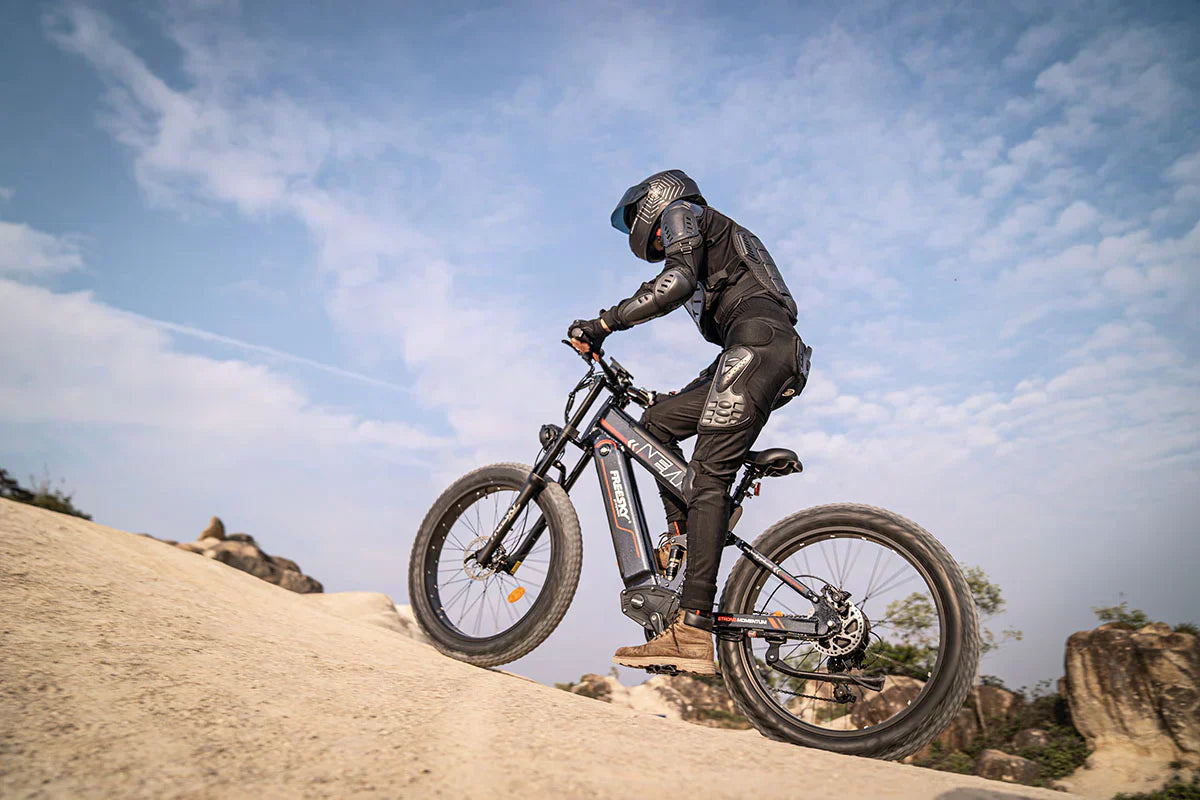
<p>The type of surface you are climbing matters. Loose gravel, wet grass, or mud can cause tires to slip, wasting the motor's energy. For off-road inclines, fat tires provide a larger contact patch, ensuring that the power from your motor actually translates into forward momentum rather than wheel spin.</p>
<p>For riders who need maximum grip on unpredictable terrain, the <a href="https://freeskyebike.ca/products/wild-cat-ultra-a-340">Wild Cat Ultra A-340</a> offers superior traction for confident climbing.</p>
<h3>Choosing the Right Tool for the Job</h3>
<p>Not all e-bikes are created equal. While a lightweight city cruiser is perfect for flat commutes, it may struggle on a 15% grade. If your goal is to conquer hills, look for mid-drive motors or high-output hub motors paired with at least a 48V system. Proper maintenance, such as keeping your drivetrain lubed and tires inflated, will also ensure your bike performs at its peak when the road turns upward.</p>
<h3>Conclusion</h3>
<p>E-bikes are not just capable of climbing steep hills; they are arguably the best tool ever invented for the task. By balancing motor assistance with smart gearing, you can transform a grueling climb into a manageable, even enjoyable, part of your journey. With the right model, no peak is out of reach.</p>
Share:
What is the Benefit of Dual Battery Ebike?
Can You Use an E-Bike for Mountain Biking? | Trails and Performance Guide