
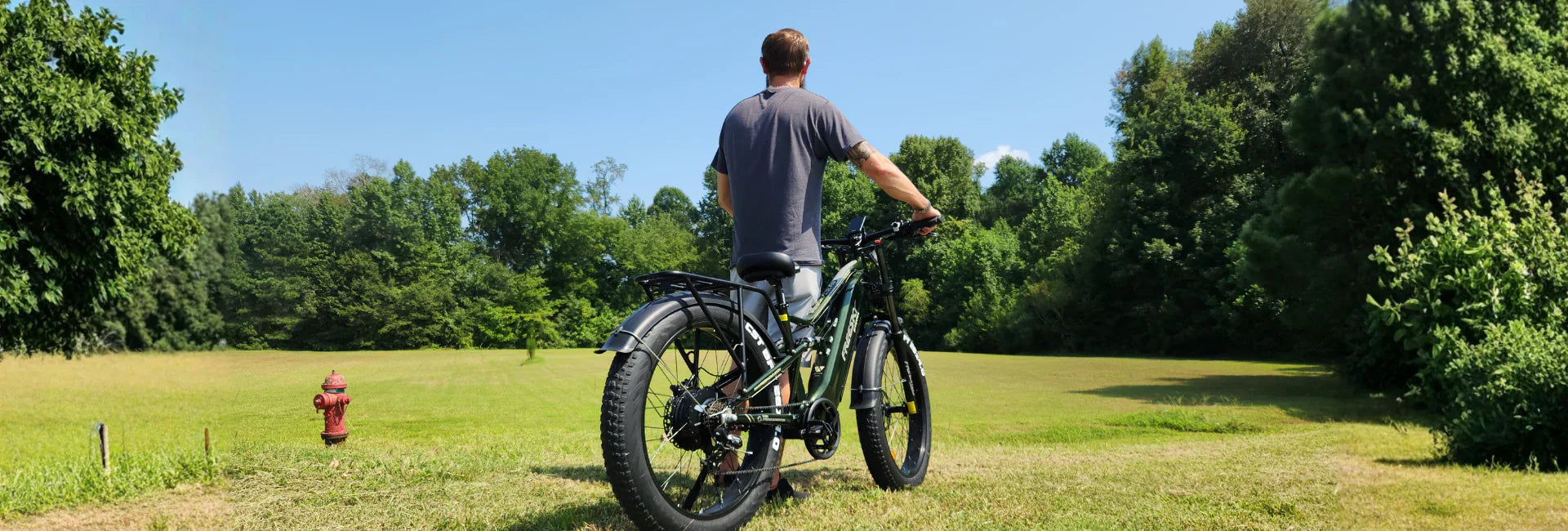
A Beginner’s Guide to Your First E-Bike Ride
Stepping onto an electric bike for the first time is an exhilarating experience. For many long-time "acoustic" riders, adding a motor can feel like a major shift, but it is much simpler than you might expect. If you are over 40 or 50, an e-bike isn't just a gadget—it’s a way to reclaim the hills and enjoy the breeze without the physical strain. Here is how to get started safely and confidently.
1. Choosing Your Ideal Riding Companion
Picking the right e-bike depends entirely on your lifestyle and where you plan to ride. Selecting a frame that fits your physical needs is the first step toward a successful journey:
- Commuter E-Bikes: Designed for utility, these often include fenders and racks—perfect for the unpredictable Canadian weather and grocery runs.
- Step-Thru E-Bikes: A favorite for those who prioritize accessibility. These frames allow you to mount the bike without swinging a leg over a high top bar, making them ideal for riders with limited hip mobility.
- Electric Mountain Bikes: If you plan to explore forest trails, these models offer the suspension needed to protect your back and joints from rough terrain.
For a smooth transition into the world of electric cycling, the Nova B-360 offers a comfortable, accessible design that is perfect for beginners.
2. Understanding the Components
While an e-bike looks like a standard bicycle, it has a few extra "muscles" that do the heavy lifting. Familiarize yourself with the Motor (your silent partner), the Battery (your fuel source), and the Display (your dashboard). Most bikes feature a Controller near your thumb, allowing you to increase or decrease the motor's assistance on the fly.
3. Safety and Pre-Ride Checks
Because e-bikes are heavier and faster than traditional bikes, safety is paramount. Always perform a "pre-flight" check before heading out: squeeze the brakes to ensure they are firm, check your tire pressure, and verify that the battery is securely locked into the frame. Visibility is also key—high-visibility clothing helps ensure you are seen by motorists and other cyclists.
4. Starting, Stopping, and Handling
When you are ready to move, always start in the lowest assist level. E-bikes have a bit of "zip," and starting at full power can be startling. Hold both brakes firmly before mounting, and release them only when you are balanced and ready to pedal. If your bike includes a throttle, like the Swift Horse Pro X-6e, use it gently to help you get across busy intersections quickly.
5. Mastering the Road
- Cornering: Slow down before you enter a turn. E-bikes carry more momentum than traditional bikes, so give yourself extra room.
- Hills: Shift into a lower gear before you reach the incline. This helps the motor work more efficiently and saves your battery.
- Wet Weather: Pavement can be slippery. Avoid painted lines when it rains and give yourself twice the usual distance to come to a full stop.
Conclusion: Being a Good Neighbor
As an e-bike rider, you are faster than most cyclists but nearly silent. Always use a bell or a friendly greeting when passing pedestrians. Riding an electric bike brings the joy of movement back into daily life. Take it slow, stay curious, and enjoy the effortless freedom of your new ride.
Share:
750W vs. 1000W E-Bike Motors: Performance and Torque Comparison