
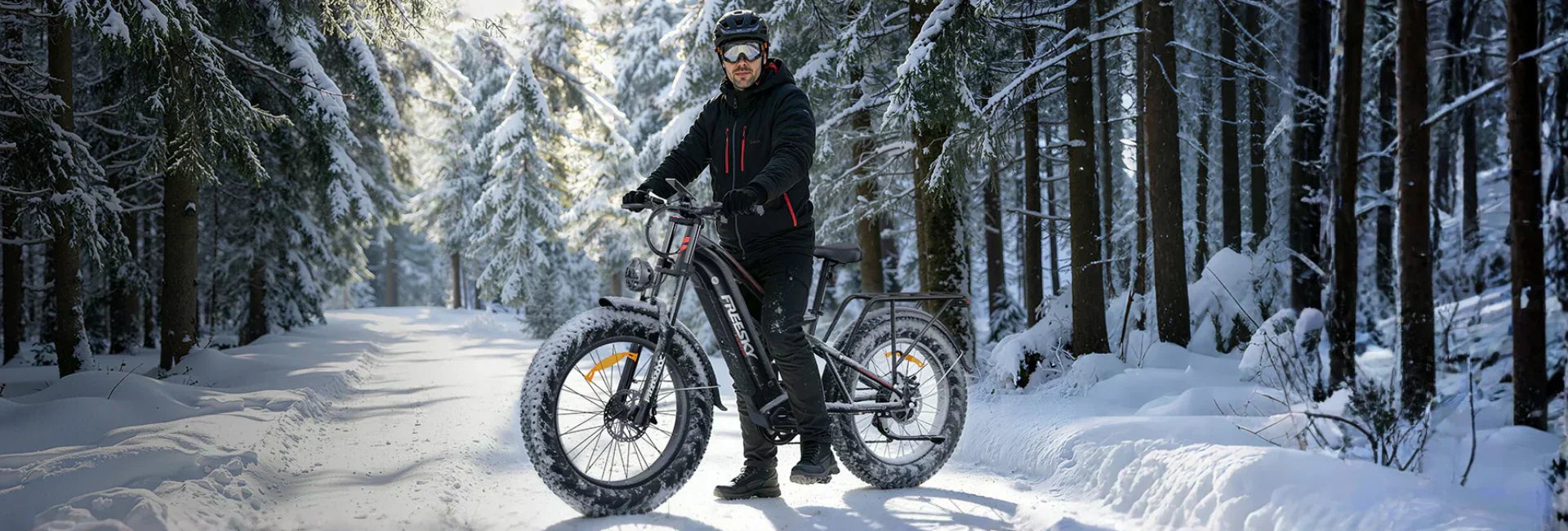
Winter Riding: How to Keep Your E-Bike Happy When It's Cold and Wet
Transitioning to winter riding doesn't have to mean hanging up your helmet until spring. While the cold air and damp roads are tougher on machinery, an e-bike makes winter commuting and exploring surprisingly accessible. By following a few simple maintenance steps, you can ensure your bike remains reliable and safe throughout the darkest months of the year.
1. Treat Your Battery Like a Pet
The battery is the heart of your e-bike, and its chemistry slows down in cold weather. You may notice a decrease in range when the temperature drops; this is normal. However, how you charge it matters most. The golden rule is never to charge a frozen battery.
If you have been out for a ride, bring the battery inside and let it reach room temperature for at least an hour before plugging it in. Charging a freezing battery can permanently damage its lifespan. If you are storing the bike for the season, keep the charge level between 50% and 70% to maintain cell health.
For those riding high-performance models like the Warrior Pro M-530, proper battery care ensures you retain that powerful climbing torque for years to come.
2. Monitor Tire Pressure (Air Shrinks!)
Physics dictates that air contracts when it gets cold. A tire filled in the warmth of September will likely be under-inflated by November. Riding on soft tires drains your battery faster and makes handling sluggish. Check your tire pressure weekly during winter.
If you encounter slush or light snow, running your tires at the lower end of their recommended PSI can provide a larger contact patch and better grip. For icy conditions, consider switching to studded tires to maintain stability on frozen pavement.
3. The Battle Against Salt and Grime
Road salt and brine are highly corrosive and can eat through metal components quickly. While you don't need to perform a full detail after every ride, a quick wipe-down is essential. Focus on the chain, the frame, and the wheel rims. A rusty chain isn't just noisy—it accelerates wear on your gears and reduces motor efficiency.
If you need a bike that is easy to mount while wearing bulky winter layers, the Wild Cat Ultra A-340 is an excellent step-thru option that stands up well to the elements.
4. Winter Brake Maintenance
Stopping distances increase on wet roads. Furthermore, winter grit can act like sandpaper on your brake pads. Listen for any grinding or scratching sounds when you stop; these are signs that your pads need cleaning or replacement. Always give your brakes a test squeeze before you leave the driveway to ensure they haven't been affected by the cold.
5. Visibility and Lighting
With shorter days, being seen is your best defense. Most modern e-bikes feature integrated lighting, but road spray can quickly coat the lens in a layer of mud. Wipe your lights before every ride. To maximize safety, consider adding a flashing light to your backpack or helmet to ensure motorists see you through the rain or fog.
6. Proper Seasonal Storage
If you decide to pause your riding during the winter, store your bike in a dry, indoor location. If it must stay in a shed or garage, use a high-quality waterproof cover to protect the electronics from moisture. Most importantly, always store the battery indoors at room temperature to prevent it from failing in the spring.
If you are looking for a machine built to handle year-round adventures, the Eurostar Ultra M-410 is a robust choice designed for durability in all seasons.
Conclusion
Winterizing your e-bike routine doesn't require expert mechanical skills—it just requires consistency. Keep it clean, keep the battery warm, and stay visible. With these habits, your e-bike will be ready for the road no matter what the Canadian winter throws your way.
Share:
Canadian Hunting E-Bike Guide 2026: Rules and Regulations
E-Bike Adventure at Waskesiu Lake: Forest Trails & Lakeside Views