
Full Suspension vs. Hardtail: Which E-Bike is Right for You?
The debate between full suspension and hardtail e-bikes is a classic among cyclists. Both designs offer unique advantages, and the right choice depends entirely on your terrain, comfort needs, and budget. For riders over 40, choosing the correct frame style can be the difference between a rejuvenating ride and a sore back. Let’s break down the key differences to help you decide.
What is a Hardtail E-Bike?
A hardtail features a rigid frame with a suspension fork at the front but no shock absorber in the rear. This design is highly efficient for power transfer. Because the rear remains stiff, every pedal stroke goes directly into moving you forward. Hardtails are generally lighter, more affordable, and require less mechanical maintenance over time.
What is a Full Suspension E-Bike?
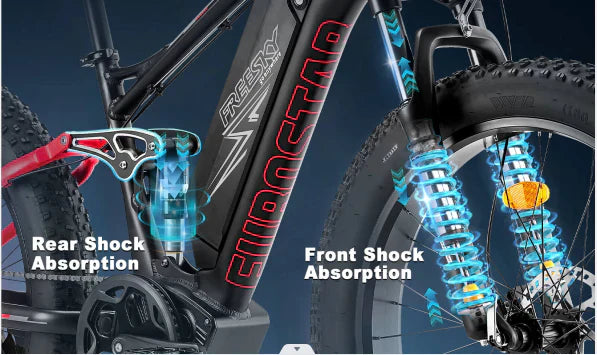
Full suspension bikes (often called "softails") feature suspension systems at both the front and rear wheels. This setup is designed to "decouple" the rider from the trail. The rear shock absorbs the force of bumps, roots, and potholes, providing a much smoother and more forgiving experience on technical terrain.
If you prioritize ultimate comfort and off-road capability, the Alaska Pro M-520 offers a premium full-suspension feel that glides over rough Canadian trails.
Comparing the Riding Experience
- Comfort and Health: Full suspension is the winner for long-distance comfort. By absorbing vibrations, it significantly reduces impact on your lower back and joints.
- Efficiency and Speed: Hardtails excel on smooth pavement and light gravel. They are more responsive and typically easier to maneuver uphill due to their lighter weight.
- Traction and Control: On bumpy descents, full suspension keeps your rear tire in contact with the ground more consistently, providing better grip and braking power.
- Maintenance and Simplicity: Hardtails are easier to clean and have fewer moving parts to service, making them a "set-it-and-forget-it" option for many commuters.
Which Should You Choose?
Your decision should be based on where you ride most often. If your routes consist of city streets, rail trails, or well-groomed paths, a hardtail is a cost-effective and efficient choice. However, if you plan to explore rugged mountain trails, uneven backcountry roads, or if you simply want the plushest ride possible to protect your back, a full suspension bike is a worthy investment.
Conclusion
There is no "perfect" bike, only the bike that is perfect for your specific journey. Consider your local terrain and your physical comfort needs. Whether you choose the agile precision of a hardtail or the cloud-like comfort of full suspension, the
Share:
Are Full Suspension Bikes Harder to Pedal?
What is a Lockable Suspension Fork? | E-Bike Comfort and Efficiency